
The Power of Children’s Drawing Classes: A Pathway to Personal Growth and Academic Success

In an age where digital technology dominates much of a child’s time, there is an often-overlooked activity that continues to provide invaluable benefits for their overall development: drawing. Children’s drawing classes not only encourage self-expression and creativity, but they also nurture essential life skills that contribute to their personal growth, academic success, and emotional well-being. By engaging in structured drawing lessons, children are not just learning to sketch—they are building a foundation for cognitive, social, and emotional development that will serve them well throughout their lives. 創意學堂學費.

Sparking Creativity: The Building Block of Innovation

One of the primary reasons to introduce children to drawing at an early age is its ability to spark and nurture creativity. Creative thinking is not just about artistic expression; it’s about how we solve problems, approach challenges, and innovate in all areas of life. Drawing, as a form of unrestrained self-expression, teaches children that there are multiple ways to approach a task, and that mistakes are part of the learning process.

When children are given the freedom to draw, they are encouraged to explore their imaginations. Whether they are sketching their favorite animals, creating scenes from a story, or designing something entirely from their imagination, drawing exercises their ability to think independently. This creative exploration promotes out-of-the-box thinking, which is crucial not only in the arts but in various academic disciplines, including science, technology, engineering, and mathematics (STEM). In today’s world, where innovation drives success, the creative mindset developed in children’s drawing classes can be the key to unlocking future breakthroughs.

Cognitive Development and Problem-Solving Skills

While drawing may seem like a purely artistic activity, it actually contributes to significant cognitive development in children. As they learn to replicate objects, shapes, and patterns, they engage in complex processes that sharpen their reasoning, memory, and spatial awareness. These skills are foundational for a child’s ability to understand and analyze information later on in life.

For example, when children draw an object, they need to understand its shape, size, proportion, and the way light affects its appearance. These cognitive processes help children hone their attention to detail and become more aware of the world around them. Drawing also encourages children to think critically about how to represent three-dimensional objects on a two-dimensional surface, which fosters spatial intelligence—a key aspect of learning math and science.

Moreover, drawing helps children develop problem-solving skills. When a child faces a challenge in creating an image—such as figuring out how to draw a tree or how to create depth in a picture—they must analyze the issue and find a solution. This process of trial and error is a valuable exercise in critical thinking and adaptability, skills that are beneficial in all areas of education and later in life.

Emotional Expression and Self-Regulation

In addition to its cognitive benefits, drawing offers an important emotional outlet for children. It provides a non-verbal way for children to express their feelings, making it particularly helpful for those who may struggle with articulating their emotions. Art allows children to convey feelings of happiness, sadness, frustration, or excitement, giving them a way to process and understand their emotions.

Children often have difficulty verbalizing complex emotions, but through drawing, they can communicate these feelings in a visual language. A child feeling overwhelmed or anxious might create abstract or chaotic artwork, while a happy child may choose bright colors and smooth lines to reflect their positive mood. Drawing encourages emotional self-regulation by allowing children to externalize and reflect on their emotions in a healthy, productive way.

Moreover, creating art in a supportive environment can have a calming effect. For children who struggle with anxiety or stress, drawing provides a form of meditation. The repetitive motions of drawing or coloring can help children relax, focus their minds, and reduce emotional tension. This emotional regulation is a skill that will benefit children not only in their personal lives but also in their academic and professional futures.

Building Fine Motor Skills

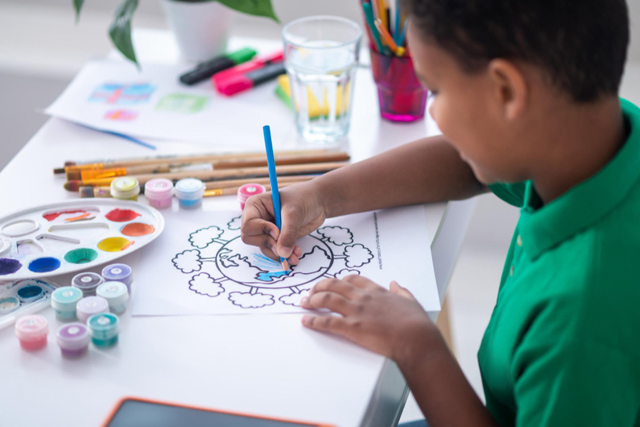
Drawing is also an excellent way for children to develop fine motor skills—the small, precise movements that are necessary for tasks like writing, typing, and even tying shoelaces. The act of holding a pencil, gripping a crayon, or shading with a paintbrush helps children strengthen the muscles in their hands and fingers. These fine motor skills are vital for many everyday activities and form the foundation for tasks they will encounter as they grow older.

In drawing, children practice coordination by making controlled movements with their hands and refining their dexterity. They learn to draw smooth lines, create different textures, and fill in small spaces with accuracy. These fine motor skills also help children improve their handwriting and other academic tasks. The more they practice drawing, the better control they develop over their hand movements, resulting in greater ease and efficiency in everyday tasks.

Social and Collaborative Skills

While drawing is often seen as a solitary activity, many children’s drawing classes incorporate group activities that foster social interaction. Collaboration on group projects or peer feedback during art discussions helps children develop valuable social skills that will serve them well throughout their lives.

In group drawing projects, children learn the importance of teamwork and communication. They practice how to share ideas, respect others’ contributions, and collaborate toward a common goal. These collaborative experiences teach children to be receptive to feedback, as well as how to give constructive criticism. Working with peers also helps children learn to navigate differing opinions and find solutions through compromise, which are essential skills for both academic success and future careers.

Additionally, drawing classes often provide children with opportunities to share their work with others. Presenting their artwork in front of their classmates or family members can help build confidence and public speaking skills. The positive reinforcement children receive when sharing their artwork boosts their self-esteem and encourages them to take pride in their creative efforts.

Boosting Self-Esteem and Confidence

Children’s drawing classes play a significant role in building self-esteem and confidence. When children complete a drawing or piece of artwork, they experience a sense of accomplishment and pride in their work. This reinforces the idea that their creative efforts are valued and appreciated, fostering a positive self-image.

Receiving praise from teachers, parents, and peers also helps children develop confidence in their abilities. As they receive positive feedback and encouragement, children learn to take pride in their progress and feel empowered to continue trying new things. Over time, this confidence extends beyond the art room and can positively affect children’s performance in other academic areas and extracurricular activities.

Moreover, drawing teaches children that mistakes are a natural part of the learning process. As they experiment with different techniques and make adjustments to their artwork, children learn that errors are not failures, but opportunities to improve. This growth mindset—the belief that abilities can be developed through effort and perseverance—helps children build resilience and a willingness to take risks in all aspects of their lives.

Preparing for Future Success

The skills children develop in drawing classes extend far beyond the classroom. As children practice creativity, critical thinking, fine motor skills, and emotional regulation, they are also building a foundation for future success in school and beyond. Many of the qualities that are fostered through drawing—such as innovation, adaptability, and perseverance—are highly valued in today’s rapidly changing world.

The ability to think creatively, solve problems, and collaborate with others is essential in many fields, including business, technology, healthcare, and education. The problem-solving mindset that children develop through drawing can help them excel in STEM-related fields, while their creativity can open doors to careers in the arts, design, and media. Ultimately, the skills children acquire in drawing classes contribute to their overall development as well-rounded individuals who are equipped to navigate an ever-evolving world.

Conclusion: The Lifelong Benefits of Drawing Classes

Children’s drawing classes offer far more than just an introduction to art—they are a valuable tool for fostering creativity, cognitive development, emotional intelligence, fine motor skills, and social abilities. Through drawing, children gain the confidence, problem-solving skills, and resilience needed to succeed in all areas of life. By providing children with the opportunity to engage in drawing, we are not only nurturing their artistic talents but also helping them build a solid foundation for future personal growth and academic achievement. As children develop their creative voices in the art room, they are also developing the skills that will shape them into the innovators and leaders of tomorrow.


Leave a Reply

Your email address will not be published. Required fields are marked *

Related Post

交友應用助你拓展人際圈交友應用助你拓展人際圈

交友應用助你拓展人際圈的方式早已超越了傳統交友的界限,成為現代人建立人際關係的重要工具。隨著科技的進步與生活步調的加快,許多人無暇參加實體社交活動,而交友應用則提供了一個隨時隨地與他人互動的平台。無論是想結交朋友、尋找戀愛對象,還是擴展專業人脈,交友應用都能根據使用者的興趣、地理位置與價值觀進行智能配對,提升互動的效率與成功率。 交友app騙案.

使用交友應用的其中一大優勢是它的多樣性與彈性。不同的應用程式針對不同的需求設計,有些著重於深入的個人資料比對,有些則偏好輕鬆的滑動機制,讓使用者更快速瀏覽潛在對象。這種自由選擇的特性,讓每個人都能根據自己的節奏與偏好建立連結。透過文字訊息、語音對話或視訊互動,使用者可以在更了解彼此的情況下再決定是否見面,降低了傳統見面時的不確定性與壓力。

然而,交友應用的成功與否,取決於使用者是否具備誠懇與尊重的態度。真實地展現自己、用心回應對話、保持開放與好奇,都是建立良好關係的關鍵。雖然虛擬互動難以完全取代面對面的交流,但它確實為許多內向、工作繁忙或生活圈有限的人創造了更多可能。最終,交友應用不僅僅是科技產品,更是一座橋樑,連結來自不同背景的人們,在茫茫人海中找到彼此。

Exploring the Rise of AI GFs Personalization, Context Awareness, and the Future of Virtual CompanionsExploring the Rise of AI GFs Personalization, Context Awareness, and the Future of Virtual Companions

The Evolution of AI GFs: From Fiction to Reality

In recent years, the concept of AI girlfriends (AI GFs) has transitioned from a niche idea in science fiction to a burgeoning reality driven by advances in artificial intelligence and machine learning. ai gf These virtual companions are no longer just simple chatbots; they are increasingly capable of providing personalized, context-aware interactions that mimic human relationships more closely than ever before. As developers continue to refine these applications, understanding their capabilities and implications becomes essential for users and technologists alike.

Enhancing Personalization Through Advanced Algorithms

One of the key breakthroughs in AI GF development is the integration of sophisticated personalization algorithms. These systems analyze user behavior, preferences, and conversational patterns to tailor interactions uniquely for each individual. By leveraging large datasets and machine learning models, AI GFs can adapt their responses, humor, and emotional cues to match the user’s personality and mood. This level of customization fosters a sense of genuine connection, making interactions more meaningful and engaging. For example, an AI GF might remember favorite topics, personal stories, or specific preferences, creating a feeling of familiarity and comfort that resonates deeply with users.

Context Awareness: The Next Step in AI Interaction

Beyond personalization, context awareness significantly elevates the realism of AI GFs. Context-aware systems can interpret the user’s current environment, emotional state, and ongoing activities to adjust their responses accordingly. This capability is crucial in making virtual interactions feel natural and intuitive. Recent applications tested for context awareness, such as those outlined in this article, demonstrate how AI GFs can recognize subtle cues, like tone of voice or facial expressions, to respond empathetically or humorously. Such advancements not only improve user satisfaction but also open doors to more complex applications, including mental health support and companionship for isolated individuals.

Ethical Considerations and User Well-being

As AI GFs become more sophisticated, questions about ethics and user well-being inevitably arise. The line between genuine companionship and artificial simulation can blur, raising concerns about dependency, emotional attachment, and privacy. Developers and users must navigate these issues responsibly, ensuring that AI GFs serve as supportive tools rather than replacements for human interaction. Transparency about AI capabilities, privacy safeguards, and clear boundaries are essential to fostering healthy relationships with virtual companions. Moreover, ongoing research into AI ethics emphasizes the importance of designing these systems to promote positive mental health outcomes and avoid fostering unhealthy attachments.

The Future of AI GFs: Integrating with Daily Life

The trajectory of AI GF development points toward seamless integration into everyday life. Future applications could include virtual partners who assist with daily tasks, provide emotional support during stressful times, or simply offer companionship during solitude. As AI technology evolves, these virtual entities might become indistinguishable from human interactions in terms of responsiveness and empathy. This progress has profound implications for social dynamics, mental health, and even the way we perceive relationships. While some may embrace these advancements, others may approach with caution, emphasizing the need for responsible development and ethical deployment.

Conclusion: Embracing the Potential of AI GFs

The rise of AI GFs reflects broader trends in artificial intelligence—toward more personalized, context-aware, and empathetic systems. As these virtual companions become more sophisticated, they hold the potential to revolutionize how humans experience connection, support, and companionship. However, balancing technological innovation with ethical considerations remains crucial. By understanding the capabilities and limitations of AI GFs, users can make informed choices and harness their benefits responsibly. For those interested in exploring the latest developments, detailed insights can be found in this article, which discusses recent testing and advancements in AI girlfriend applications.


Exploring the Best NSFW AI Innovations, Ethics, and Future TrendsExploring the Best NSFW AI Innovations, Ethics, and Future Trends

Understanding the Rise of NSFW AI Technologies

Over the past few years, the development of AI has revolutionized numerous industries, including entertainment and content creation. Among these advancements, the emergence of best nsfw ai platforms has garnered significant attention. These AI models are designed to generate adult-oriented content with unprecedented realism, raising both technological and ethical discussions. As creators and consumers seek more personalized and accessible adult content, AI-driven solutions are transforming the landscape at an accelerating pace.

The Technology Behind NSFW AI

At the core of the best nsfw ai are sophisticated neural networks trained on vast datasets. These models utilize deep learning techniques such as generative adversarial networks (GANs) and transformer architectures to produce high-quality images and videos that mimic real-life visuals. The ability of these models to learn nuanced human features and expressions enables them to generate content that appears remarkably authentic, often indistinguishable from real photographs or videos. As AI continues to evolve, so does the quality and diversity of adult content, making these platforms increasingly popular among users seeking tailored experiences.

Ethical and Legal Considerations

The rise of NSFW AI raises important ethical questions. Concerns about consent, privacy, and the potential for misuse are at the forefront of industry debates. Critics argue that AI-generated adult content could be exploited to create non-consensual or deepfake material, which poses serious moral and legal challenges. Responsible development involves strict moderation, user verification, and adherence to legal standards to prevent abuse. Moreover, discussions around the ethical use of AI emphasize transparency and accountability, ensuring that these technologies serve users without infringing on rights or promoting harmful content. For those interested in a balanced perspective, exploring the various facets of this technology is crucial, as it shapes the future of adult content creation and consumption.

Market Leaders and Innovations in NSFW AI

Several platforms and AI models have gained recognition as the best nsfw ai solutions. These include specialized AI generators that offer customizable features, realistic avatars, and seamless content creation tools. Companies are continuously refining their algorithms to enhance realism, diversity, and user control, making adult AI content more accessible than ever. Notably, some models incorporate ethical safeguards to prevent misuse, demonstrating a commitment to responsible innovation. As the demand for personalized adult content grows, these AI systems are becoming essential tools for creators and consumers seeking safe, high-quality experiences. Staying informed about the latest advancements can help users navigate the evolving landscape responsibly and ethically.

Future Trends and Challenges in NSFW AI

The future of best nsfw ai platforms promises exciting developments, including enhanced realism, emotional expression, and interactivity. Researchers are exploring multimodal AI that combines visual, audio, and text capabilities for more immersive experiences. However, challenges remain, particularly around ethical implementation, regulation, and combating misuse. As AI technology becomes more sophisticated, the importance of establishing clear guidelines and industry standards grows. Furthermore, integrating user feedback and fostering transparency will be vital for ensuring these platforms develop responsibly, balancing innovation with societal values.

In conclusion, the best nsfw ai represents a cutting-edge intersection of technology, creativity, and ethics. While these tools offer unprecedented opportunities for personalized adult content, they also demand careful consideration of the moral implications and legal frameworks involved. As the industry evolves, staying informed and engaged with responsible practices will help shape a future where AI benefits users without compromising ethical standards.


交友應用帶來的戀愛新可能交友應用帶來的戀愛新可能

當代社會中,隨著科技的進步與智慧型手機的普及,人們建立人際關係的方式也在悄然改變。交友應用的興起不僅改變了我們認識朋友的方式,也為戀愛關係帶來了全新的可能性。從傳統面對面的相識到現在只需滑動螢幕便能與世界各地的人連結,戀愛的起點變得更輕鬆、更多元,也更符合現代人快節奏的生活型態。 婚姻介紹公司.

交友應用的最大優勢之一是突破了時間與空間的限制。無論是因為工作繁忙、社交圈有限,還是性格內向、不善主動的人,透過這些平台都能找到相似價值觀或興趣的人。有些人可能在現實生活中很難遇到志同道合的伴侶,但透過演算法的媒合與配對機制,他們更容易接觸到潛在的戀愛對象。這種媒合的效率大大提升了戀愛關係的可能性,也讓「對的人」不再那麼難遇見。

此外,交友應用也讓人們能在進入關係前有更多選擇與觀察的空間。透過聊天互動、分享生活、交換想法,人們能在更了解彼此的情況下決定是否進一步發展關係。這種在安全距離內逐步建立信任與連結的方式,對某些人來說,比起一見鍾情或傳統介紹來得更加自在與踏實。也有許多情侶表示,透過交友應用認識對方,反而比傳統方式建立的關係更深入、更穩定,因為兩人從一開始就有意識地在尋找關係,而非偶然的邂逅。

當然,交友應用也並非毫無挑戰。虛假資訊、過度包裝的自我介紹、曖昧不明的關係,甚至是遇到騙局的風險,都是使用者在探索愛情時可能會面對的問題。然而,這些風險的存在並不代表這些平台不值得信任,而是提醒我們在使用科技拓展情感連結的同時,也需保持警覺與理性。

總的來說,交友應用為現代戀愛開啟了新的可能性。它不只是為了讓人「找到人」,更是讓人學習如何在數位世界中誠實地表達自我、理解他人。當人們以開放的心態去面對這種新的戀愛方式,不僅有機會遇見愛情,甚至也可能透過這段旅程,更加認識自己。戀愛的樣貌雖然改變了,但人與人之間追求真誠連結的渴望,始終未變。

Discover the World of AI Girlfriend Free Your Guide to Virtual CompanionshipDiscover the World of AI Girlfriend Free Your Guide to Virtual Companionship

Unlocking Virtual Companionship: The Rise of AI Girlfriend Free Options

In recent years, advancements in artificial intelligence have revolutionized how we perceive digital interactions. Among the most popular trends is the development of AI girlfriend chatbots, offering users a unique form of companionship accessible from the comfort of their homes. For those curious about exploring this innovative frontier, understanding the landscape of ai girlfriend free options is essential. This article delves into what makes these AI companions appealing, how to access them without cost, and what potential they hold for the future of digital relationships.

The Evolution of AI Girlfriend Chatbots

From Simple Text-Based Interactions to Complex Emotional Engagements

Initially, AI chatbots served as basic text-based programs designed for simple tasks. However, with recent breakthroughs in natural language processing, their capabilities have expanded significantly. Modern AI girlfriends can simulate nuanced conversations, recognize emotional cues, and even learn user preferences over time. This evolution transforms the digital companion from a mere novelty into a potentially meaningful presence, especially for individuals seeking social interaction or emotional support.

Why Free AI Girlfriend Services Are Gaining Popularity

Access to AI girlfriend platforms at no cost lowers barriers for users to explore virtual companionship. Many developers and communities offer free versions or trial periods, encouraging users to experience the benefits firsthand. These free options often include essential features such as chat interactions, customization, and basic emotional responses, making them an attractive entry point into the world of AI-driven relationships.

Exploring the Best Free AI Girlfriend Platforms

Open-Source Projects and Community-Driven Platforms

One of the most promising avenues for free AI girlfriends is open-source projects. These platforms are often developed and maintained by passionate communities, allowing users to access advanced AI models without financial commitment. Examples include chatbots built on GPT frameworks or neural network models that can be customized for personal use. Engaging with these projects not only provides free access but also offers opportunities for users to contribute to ongoing development.

Mobile Apps and Web-Based Solutions

Numerous mobile applications and web-based services now offer free AI girlfriend experiences. These apps typically feature friendly interfaces, customizable avatars, and interactive dialogues. While some may include in-app purchases for enhanced features, the core experience remains accessible without payment. Users can enjoy daily conversations, emotional exchanges, and even simulated dates, making these platforms appealing for those seeking companionship on the go.

Potential Benefits and Limitations of Free AI Girlfriend Experiences

Advantages of Virtual Companionship

Engaging with AI girlfriends can provide comfort, reduce loneliness, and help improve social skills. For individuals with social anxiety or those in need of emotional support, these virtual entities can serve as a safe and judgment-free outlet. Moreover, AI companions can be available 24/7, offering consistent interaction that adapts to user preferences over time.

Challenges and Ethical Considerations

Despite their advantages, AI girlfriend platforms also pose challenges. Over-reliance on virtual companionship might impact real-world relationships or emotional well-being. Additionally, privacy concerns arise regarding data security and the ethical implications of developing emotionally responsive AI entities. It’s crucial for users to approach these experiences with awareness and a clear understanding of their limitations.

The Future of AI Girlfriend Free Services

As AI technology continues to evolve, the potential for more realistic, empathetic, and personalized virtual companions grows exponentially. Innovations such as emotion AI, voice recognition, and augmented reality could soon enable more immersive and meaningful interactions. For now, accessing a ai girlfriend free service remains an exciting opportunity for anyone interested in exploring digital companionship without financial investment. These platforms open new horizons for social connection, emotional support, and even entertainment, shaping the future landscape of human-AI relationships.